HOW STORMWATERIQ WORKS
StormwaterIQ Identifies Stormwater Pollution Risks Before They Become Pollution Risks
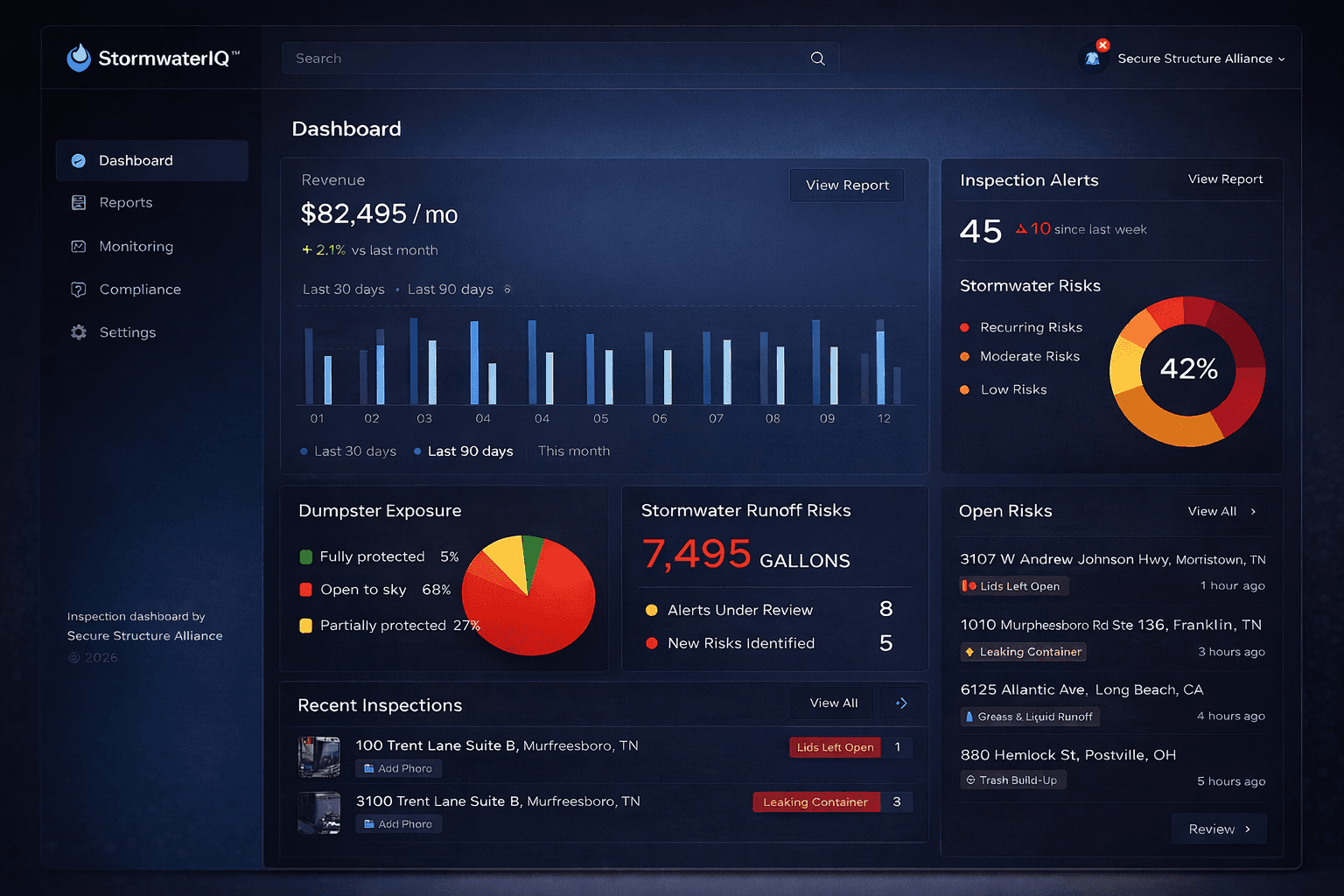
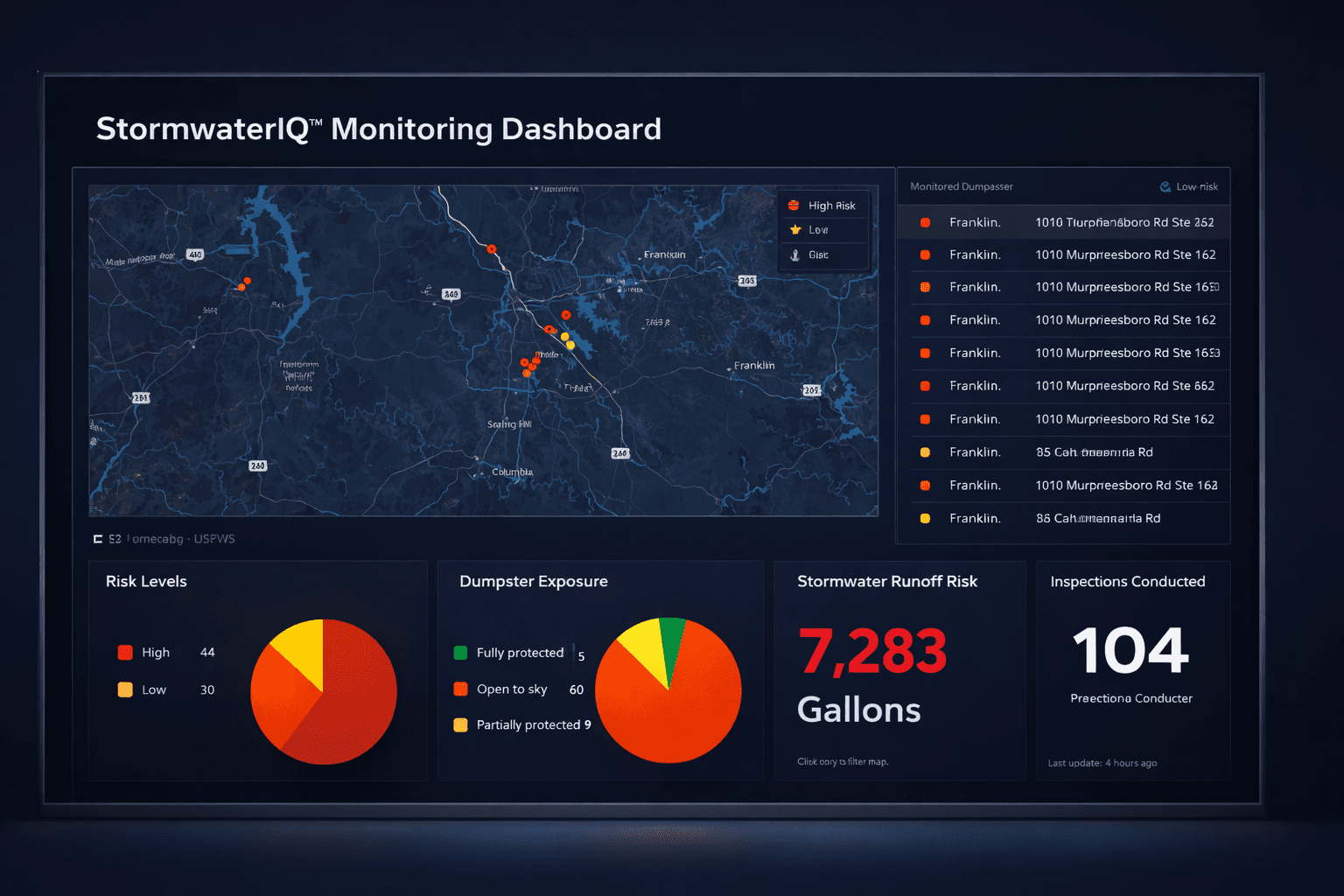
StormwaterIQ combines field inspections, GIS mapping, and compliance documentation to identify pollution risks around dumpster areas and track improvements over time.
STORMWATER RISK INSIGHTS
Dumpster Areas Are One of the Most Overlooked Stormwater Pollution Sources
Open dumpsters, leaking containers, and poorly managed trash areas allow contaminated runoff to enter storm drains during rain events—carrying pollutants directly into local waterways.

StormwaterIQ™ turns hidden dumpster risks into trackable compliance data for property owners and municipalities.
STORMWATER PLATFORM
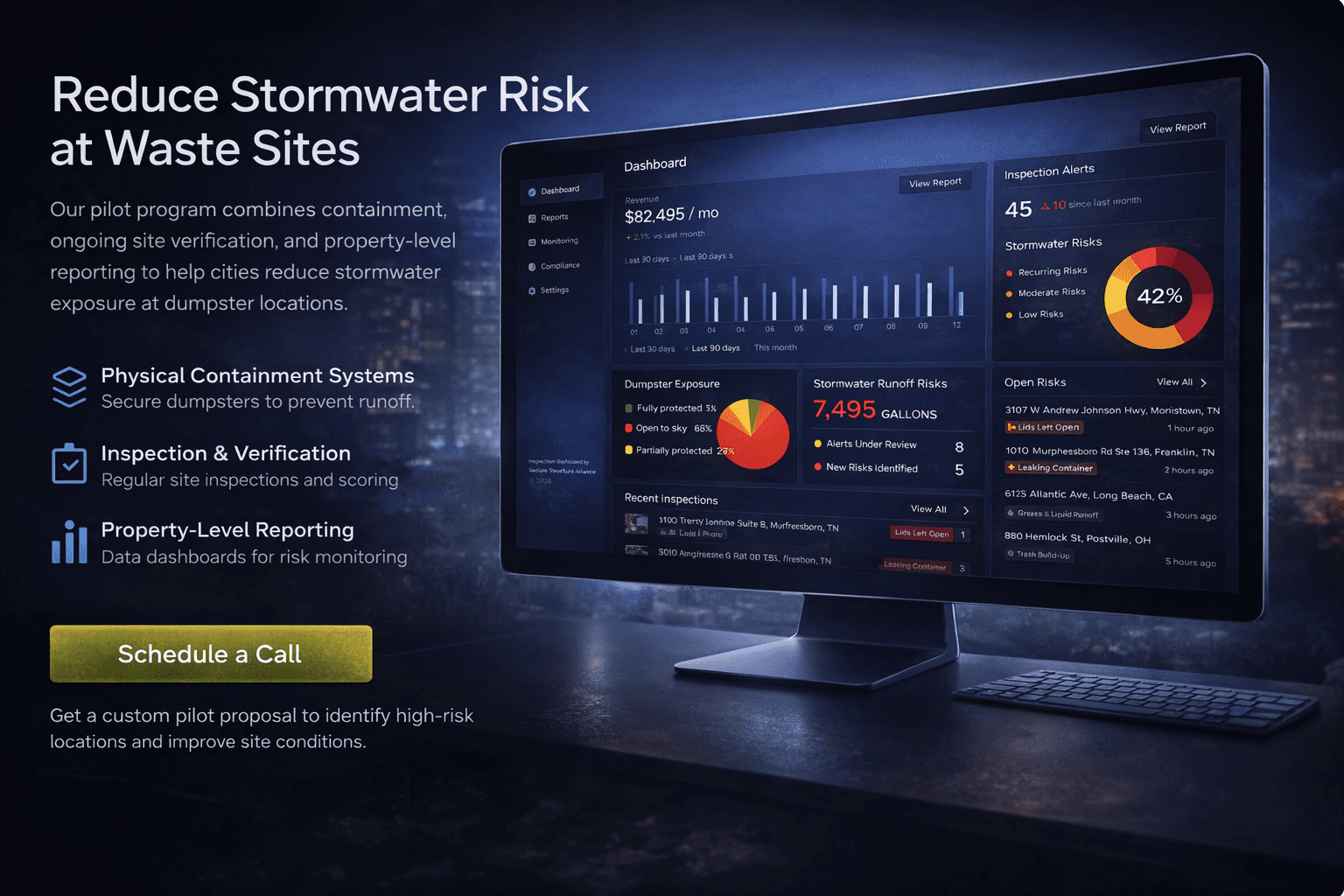
Stormwater Risk Intelligence for Modern Cities
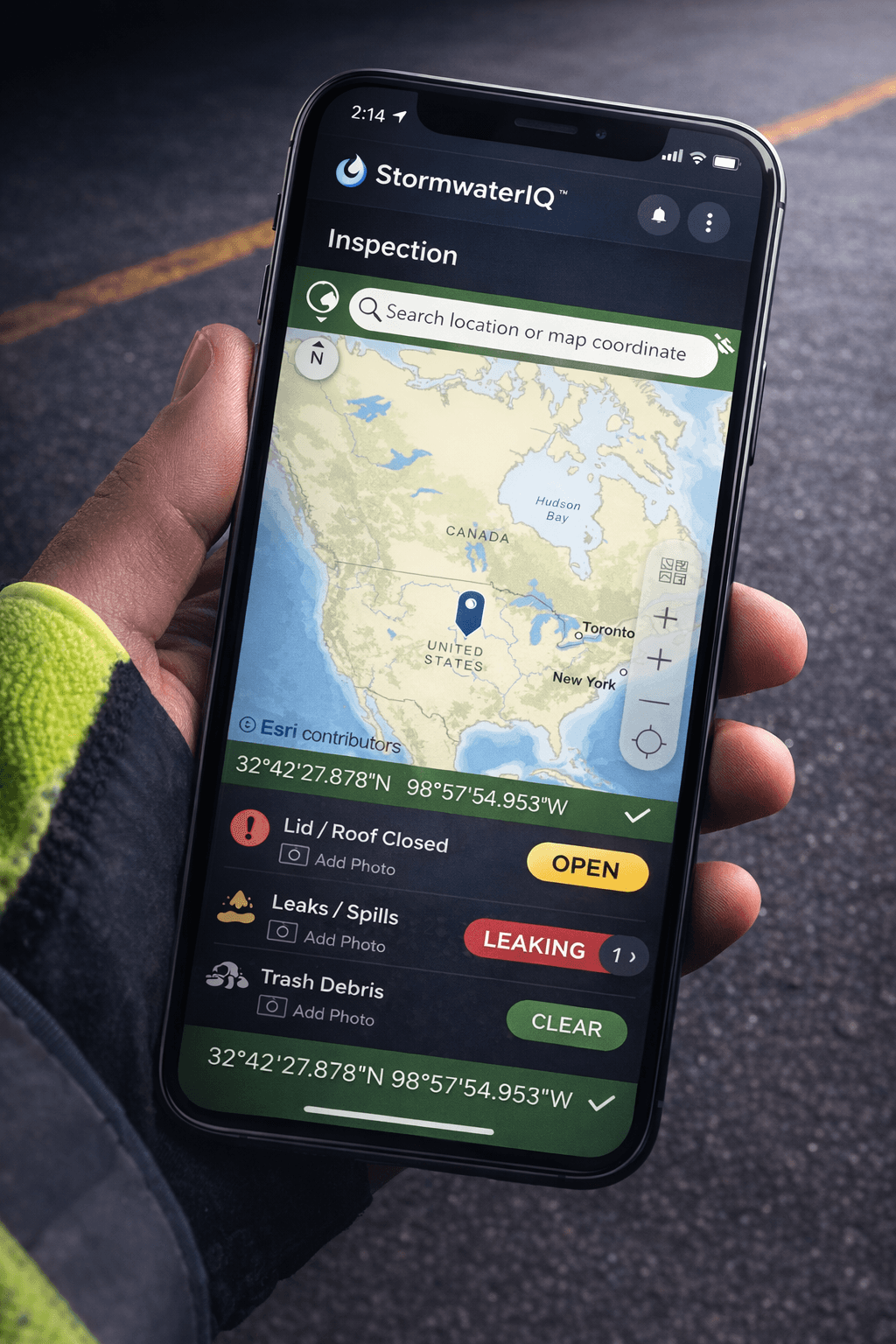
Real-Time Inspection Reporting
Inspectors can document dumpster conditions directly from the
field using mobile forms. Inspection data is instantly uploaded
to the StormwaterIQ platform where it can be reviewed, mapped,
and tracked over time.
Stormwater Risk Analytics
StormwaterIQ aggregates inspection data across properties
and municipalities to identify pollution trends, track risk
levels, and measure improvements in stormwater protection
efforts.
OPEN LIDS DETECTED
Risk Score: critical
LEAKING CONTAINERS
Risk Score: Medium
Damaged containers
Risk Score: low
StormwaterIQ™ Pricing
StormwaterIQ™ pricing is based on the number of dumpster locations monitored.
Scale from single properties to citywide monitoring programs.
Baseline Setup
$45 per dumpster
(one-time)
Baseline field survey
GIS pin verification
Baseline photo documentation
Initial risk scoring/Onboarding
Monthly Monitoring
Starting at $25 per
dumpster / month
Monthly inspection check
Updated photos (1–3)
Risk score refresh
Issue flagging (lids, leaks, staining)
Live GIS dashboard updates
Monthly reporting exports
Risk+
+$10 per dumpster /
month
Corrective action tracking
Re-inspection verification
Priority risk queue
Before / after improvement tracking
Executive compliance reports
Initial risk scoring/Onboarding
Minimum program size: $500/month
Volume discounts available for large portfolios and municipal programs.
Additional Program Modules
Adopt-A-Dumpster™ Program
+$10 per dumpster /
month
Sponsor-branded GIS map pin
Sponsor logo in location popup
Sponsor listing on sponsor page
Public sponsor recognition
Impact metrics reporting
After-Storm Inspection
$95 per dumpster /
storm event
Post-storm condition photos
Storm event documentation
Updated risk scoring
Priority inspection queue
Event reporting export
72-Hour Risk Closure
$65 per re-inspection
or $10 per dumpster /
month
Priority re-inspection scheduling
Closure verification photos
Compliance documentation record
Enforcement-ready reporting
Risk score update
Example StormwaterIQ™ Program Sizes
Typical monitoring portfolios range from single retail properties to city-wide stormwater programs.
Retail Center Portfolio
12 dumpsters monitored
≈ $300 / month
Includes monthly inspection, risk scoring, and compliance documentation.
Regional Property
Portfolio
85 dumpsters monitored
≈ $2,125 / month
Portfolio-wide GIS visibility and prioritized risk tracking.
Retail Center Portfolio
400 dumpsters monitored
≈ $9,600 / month
Municipal compliance reporting and system-wide stormwater risk intelligence.
Custom pricing available for municipalities, large portfolios, and hauler partnerships.
StormwaterIQ™ Program FAQ
Frequently Asked Questions
Common questions from property owners, municipalities, and environmental compliance teams.
What is StormwaterIQ?
StormwaterIQ is a stormwater inspection and risk intelligence platform that helps municipalities and property owners identify pollution exposure, assess site conditions, and track stormwater program performance across assets and locations.
What is a stormwater inspection?
A stormwater inspection evaluates potential pollution risk areas such as dumpsters, drainage systems, and runoff zones to identify exposure points and reduce the likelihood of contaminated discharge entering the stormwater system.
Why are dumpster areas considered stormwater pollution risks?
Dumpster areas often generate contaminated runoff from leaking waste, food residue, grease, and liquids. Without proper containment and inspection, these pollutants can flow into storm drains and waterways, increasing environmental risk and potential enforcement exposure.
What regulations require stormwater inspections?
Stormwater inspections are required under regulations such as EPA Clean Water Act programs, MS4 permits, and SWPPP (Stormwater Pollution Prevention Plan) requirements for Stormwater programs.
What is MS4 stormwater compliance?
MS4 stands for Municipal Separate Storm Sewer System. MS4 permits require cities and organizations to manage stormwater runoff and prevent pollutants from entering public waterways.
How does StormwaterIQ help municipalities manage stormwater programs?
StormwaterIQ provides a centralized system for tracking inspection locations, documenting pollution risks, capturing photos, and generating risk reports for stormwater programs.
Can StormwaterIQ document stormwater inspections?
Yes. StormwaterIQ allows inspectors to record photos, notes, risk scores, and corrective actions during inspections to maintain a complete environmental risk record.
Who typically uses StormwaterIQ?
StormwaterIQ is used by municipalities, environmental compliance teams, property managers, facility operators, and organizations responsible for stormwater pollution prevention programs.
How does StormwaterIQ identify stormwater pollution risks?
StormwaterIQ combines field inspections, GIS mapping, photo documentation, and risk scoring to identify pollution pathways around dumpsters, drainage systems, and runoff areas.
What types of properties require stormwater inspections?
Stormwater inspections are commonly required for retail centers, restaurants, apartment complexes, industrial facilities, and commercial properties that generate runoff or store waste outdoors.
What is a SWPPP and why is it important?
A Stormwater Pollution Prevention Plan (SWPPP) outlines procedures and best management practices used to prevent pollutants from entering stormwater systems at a facility or construction site.
How can property managers reduce stormwater pollution risks?
Property managers can reduce stormwater pollution risks by maintaining clean dumpster areas, installing covered waste containers, conducting regular inspections, and documenting compliance activities.
Can StormwaterIQ help with environmental compliance reporting?
Yes. StormwaterIQ helps organizations generate inspection records and compliance documentation that can be used for environmental reporting and regulatory audits.
How often should stormwater inspections be performed?
Inspection frequency depends on local regulations and site conditions, but many municipalities require monthly, quarterly, or post-storm inspections to ensure ongoing compliance.
How does StormwaterIQ help prevent water pollution?
By identifying pollution risks early, documenting inspections, and tracking corrective actions, StormwaterIQ helps organizations prevent contaminants from entering storm drains and local waterways.